The Role of Agentic AI in Software Development
Agentic AI the Future of Software Development
A tech enthusiast with a passion of writing and blogging.
Remember the days when debugging meant spending hours staring at cryptic error messages, wondering if the semicolon you forgot three files ago was the culprit? Those marathon coding sessions fueled by coffee and sheer determination might soon become nostalgic memories as agentic AI transforms how we build software.
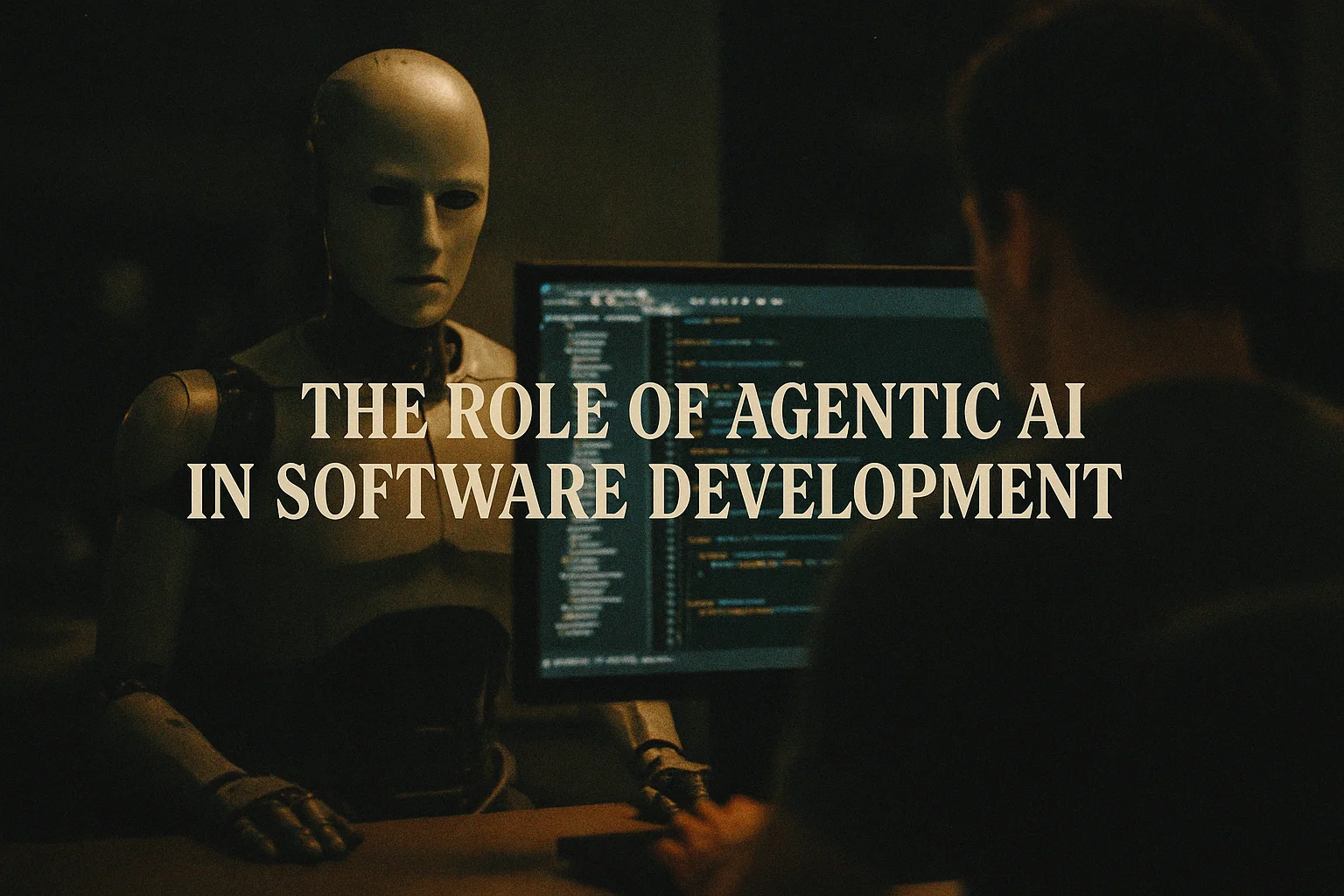
Unlike traditional AI tools that simply respond to prompts, agentic AI systems can independently plan, execute tasks, and make decisions throughout the development process. Think of them less as sophisticated autocomplete tools and more like digital teammates who can actually understand project context and work autonomously toward goals.
Beyond Code Completion
Most developers have already experienced AI assistance through tools like GitHub Copilot, which suggests code snippets based on comments or partial implementations. But agentic AI takes this several steps further. These systems can analyze entire codebases, understand architectural patterns, and make informed decisions about how to implement complex features from start to finish.
Consider a typical scenario: you need to add user authentication to an existing application. Instead of manually researching best practices, writing boilerplate code, and integrating various security libraries, an agentic AI system could analyze your current architecture, choose appropriate authentication methods, implement the necessary code across multiple files, write corresponding tests, and even update documentation—all while following your team's established coding standards.
The Autonomous Development Cycle
What makes agentic AI particularly powerful is its ability to handle complete development workflows. These systems can break down high-level requirements into specific tasks, prioritize them based on dependencies, and execute them in logical sequences. They're capable of writing code, running tests, identifying failures, debugging issues, and iterating until requirements are met.
This autonomous capability extends to quality assurance as well. Agentic AI can generate comprehensive test suites, perform code reviews, identify potential security vulnerabilities, and suggest optimizations—tasks that traditionally require significant human oversight and expertise.
Collaborative Intelligence
The real magic happens when agentic AI works alongside human developers rather than replacing them. While these systems excel at handling routine tasks and generating initial implementations, human creativity, and domain expertise remain irreplaceable for architectural decisions, user experience considerations, and complex problem-solving.
Smart development teams are learning to leverage this partnership effectively. Developers can focus on high-level design decisions, creative problem-solving, and stakeholder communication while delegating implementation details, testing, and maintenance tasks to AI agents. This division of labor allows human developers to work at a more strategic level, potentially increasing both productivity and job satisfaction.
Challenges and Considerations
However, this technological shift isn't without complications. Code generated by agentic AI systems can sometimes be difficult to understand or maintain, especially when the AI makes decisions that aren't immediately obvious to human team members. There's also the question of accountability—when an AI agent introduces a bug or security vulnerability, determining responsibility becomes more complex.
Organizations adopting agentic AI must also consider the learning curve for their development teams. While these tools can dramatically increase productivity, they require developers to develop new skills around AI collaboration, prompt engineering, and system oversight.
Looking Forward
Early adopters of agentic AI in software development are already reporting significant productivity gains, with some teams completing projects in half the traditional timeframe. As these systems become more sophisticated and better integrated into development environments, we're likely to see even more dramatic changes in how software is built.
The software development industry has always been shaped by tools that amplify human capability—from text editors to integrated development environments to version control systems. Agentic AI represents the next major evolution in this progression, promising to handle increasingly complex tasks while freeing developers to focus on innovation and problem-solving.
The question isn't whether agentic AI will transform software development but how quickly development teams can adapt to harness its potential. Those who embrace this partnership between human creativity and artificial intelligence will likely find themselves building better software faster than ever before, while those who resist may find themselves struggling to keep pace in an increasingly AI-enhanced world.


